
Dynamic mechanical analysis (DMA)
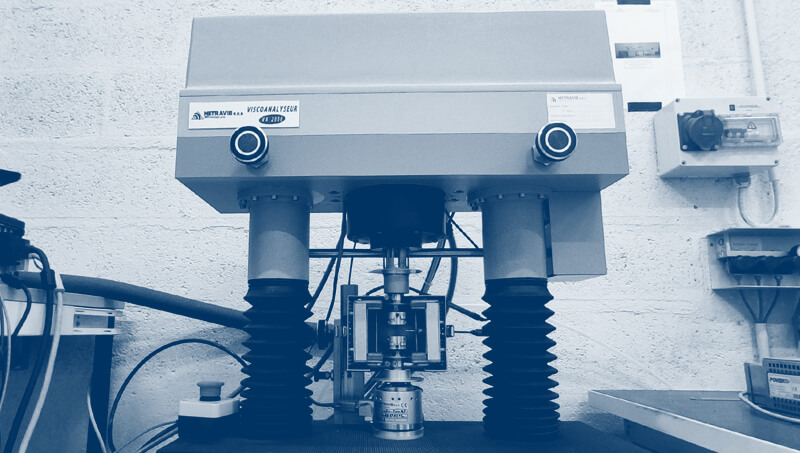
CEVAA carries out and supports manufacturers in dynamic mechanical analysis (DMA).
Caractérisation de propriétés mécaniques dynamiques
In order to meet the need for characterization of materials, particularly polymers, CEVAA from 6NAPSE group supports manufacturers in dynamic mechanical analysis (DMA).
Our equipment enables the determination of the following material mechanical properties:
- Young’s modulus (tension, compression, or flexure)
- Shear modulus
- Poisson’s ratio (transverse contraction effect)
- Loss factor (damping capacity)
- Glass or rubbery transition (variation with temperature [-150 to +450°C] and frequency [0–200 Hz])
Why conduct a DMA analysis?
From the measurement of the intrinsic properties, the moduli, the loss factor and the glass transition temperature, we can:
- Establish relationships between the structure, the morphology of materials and the performance required for the end use.
- Determine the field of use in temperature, frequency and rate of deformation
- Predict the long-term or extended-frequency behavior of materials using WLF or Arrhenius laws.
Technical characteristics
Sollicitations modes
Our equipment makes it possible to obtain the mechanical properties of the material. The plate, beam or cylinder type samples have reduced dimensions of a few tens of millimeters. CEVAA offers a great versatility of stress modes.
- Moduli: complex, storage, loss, shear
- Stress modes: traction, compression, shear on embedded sample and bending on “free-free” sample
Details of characterized properties
Stiffness (dynamic): K
Stiffness (real part): K’
Stiffness (imaginary part): K’’
Loss angle: Delta
Loss factor: Tangent delta
Young’s modulus: E
Elastic Young’s modulus (real part): E’
Viscous Young’s modulus (imaginary part): E’’
Shear modulus: G
Elastic shear modulus (real part): G’
Viscous shear modulus (imaginary part): G’’
Complex dynamic viscosity: V*
Dynamic viscosity (real part): V’
Dynamic viscosity (imaginary part): V’’
Complex compliance: J
Compliance (real part): J’
Compliance (imaginary part): J’’
Thermal chamber energy
Dissipated energy
Characteristic temperatures
Glass transition temperature: Tg
Sample types
- Elastomers
- Thermoplastic polymers
- Thermosetting polymers (polymerized, unpolymerized)
- Composites
- Adhesives
- Metals and metal alloys
- Ceramics, glass
- Bitumens (solid)
Sample sizes
- Tensile: parallelepipedic shape sample [60x20x10mm] max / cylindrical shape sample [50x3mm] max
- Compression: parallelepipedic shape sample [60x40x40mm] max / cylindrical shape sample [60x40mm] max
- Bending: parallelepiped shaped sample [60x26x4 mm] max and minimum length of 50 mm
- Shear: Cylindrical shaped sample [20×10mm] max
Materials characterization benches
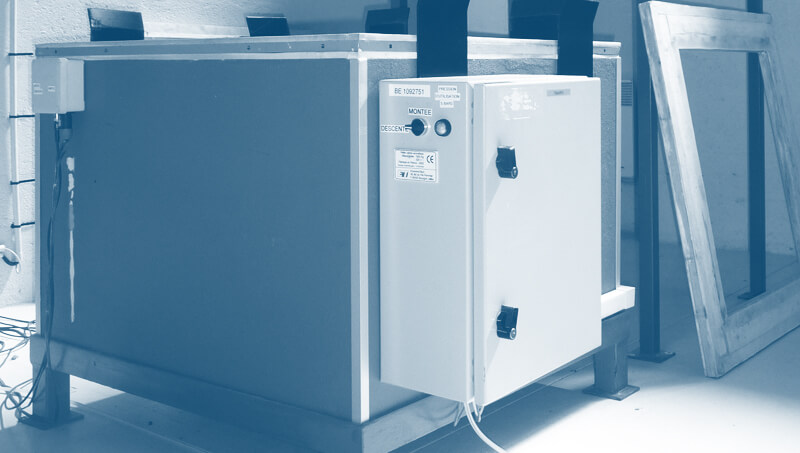
Small cabin
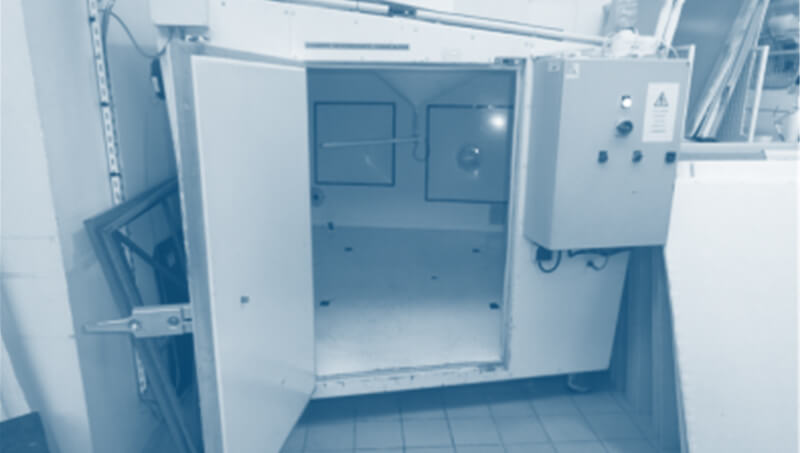
Alpha cabin
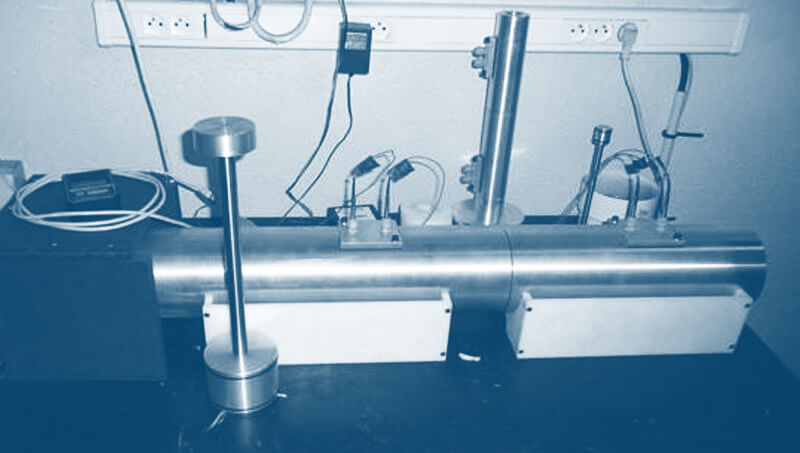
Impedance tubes
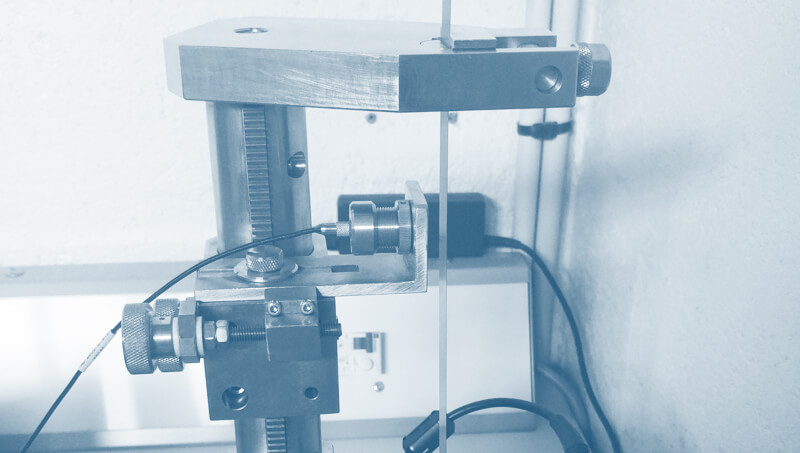
Oberst method
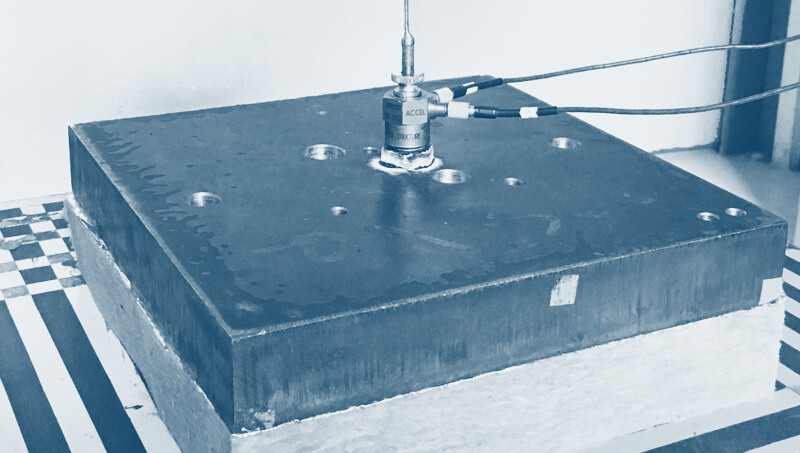
Dynamic stiffness bench
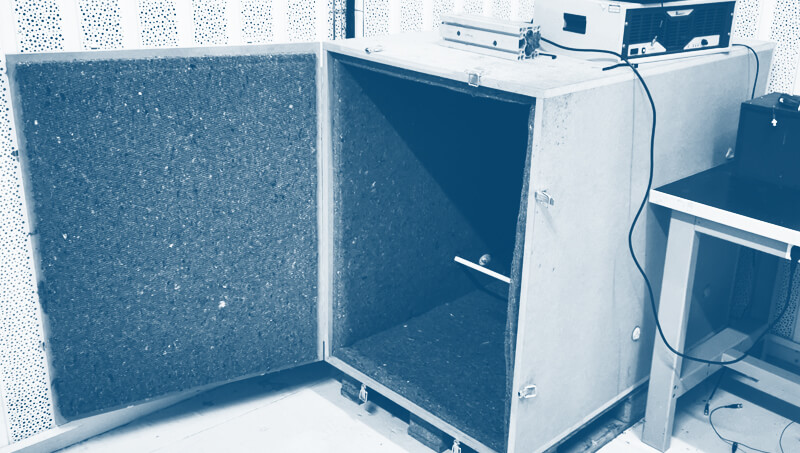
S&R bench
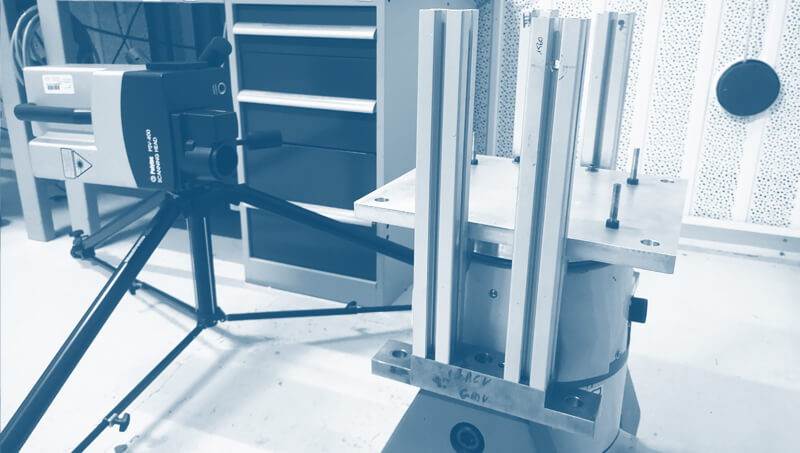
Poisson's ratio bench
DMA
For more information, contact our teams!